Stinging insect pressure in Davidson County accelerates from June through late October when feral colonies reach peak populations of 1,000 to 4,000 individual workers. In older architectural pockets such as…
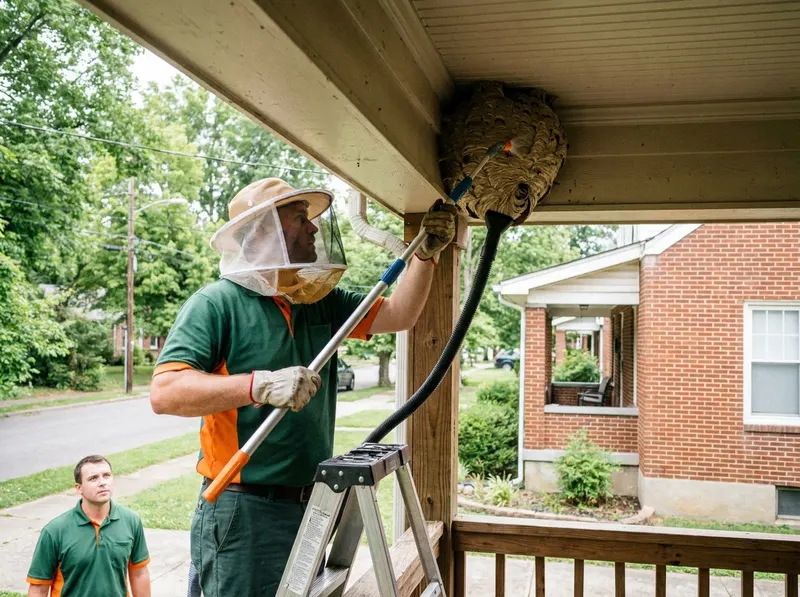
Stinging insect pressure in Davidson County accelerates from June through late October when feral colonies reach peak populations of 1,000 to 4,000 individual workers. In older architectural pockets such as Belmont-Hillsboro, Sylvan Park, and Germantown, queens exploit gaps in uncaulked fascia boards, soffit vents, and historic brick weep holes to construct nests inside wall cavities. By contrast, properties near open water and wooded tracts, including Donelson near the Stone River basin, Inglewood, and homes bordering Radnor Lake State Park, experience elevated subterranean yellowjacket colonies nesting in abandoned rodent burrows and decayed root systems. The structural trade-off between exterior aerial nests and wall-void infestations dictates protocol: exposed paper wasp umbrellas on eaves require surface knock-down and residual repellent barriers, whereas wall-void infestations require micro-injection dusts under 30 PSI to penetrate the core comb without driving defensive insects into interior bedrooms or living areas.
DIY eradication via retail aerosol sprays presents measurable structural and health hazards. Over-the-counter pyrethroid cans spray up to 20 feet but often agitate hornets before reaching the brood chamber, triggering swarm attacks. When homeowners spray retail foams into exterior wall seams in homes across The Nations, East Nashville, or Green Hills, insects chew through interior drywall to escape the irritant, breaching interior living spaces within 12 to 24 hours. Professional eradication utilizes non-repellent transfer dusts or micro-encapsulated formulations applied directly at void entry pathways. After worker activity ceases within 2 to 24 hours, technicians physically detach the comb structure to eliminate secondary scavenging pests such as dermestid carpet beetles, blow flies, and ants that target abandoned protein reserves.
1. Initial species identification and structural flight path tracking confirm the precise nest location.
2. Targeted application of botanical or synthetic pyrethroid dust into the primary entry collar neutralizes the defensive guard workers.
3. Complete mechanical extraction of visible paper combs prevents odor and secondary carpet beetle infestations.
4. Application of silicone-based sealant and copper mesh prevents re-nesting in historic limestone foundations and soffit gaps throughout Belle Meade and Crieve Hall.
Every job gets a firm, written price after a free on-site visit.
Tell us about your stinging insect nest removal job in Nashville and we'll send a clear, written quote, usually the same day.
 Praxira Pest Experts