Finding active infestations inside residential living quarters demands deliberate eradication, which is why professional pest control services in Nashville focuses on structural entry defense rather than superficial chemical applications. Homeowners seeking pest control services near me receive comprehensive site diagnostics that pinpoint subfloor void intrusions, limestone foundation seepage lines, and roofline entry gaps across Middle Tennessee properties.
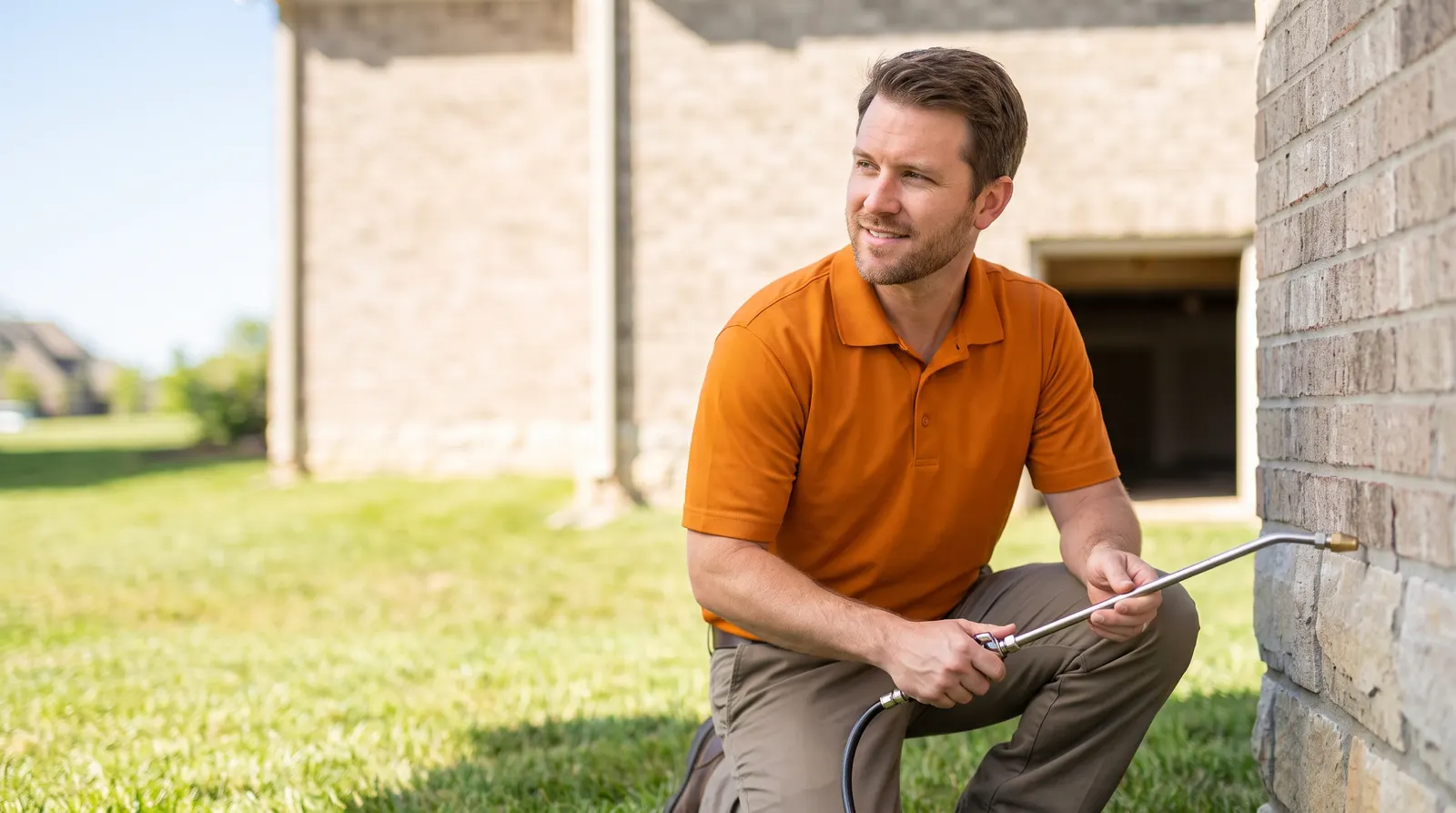
Pest control services in Nashville is a specialized structural inspection, targeted extermination, and biological exclusion process designed to eliminate wood-destroying organisms, venomous arachnids, and nesting vermin from Davidson County residential and commercial properties.
Every service reflects the same meticulous attention to detail, whether it's a single job or a larger pest control services project across Nashville.
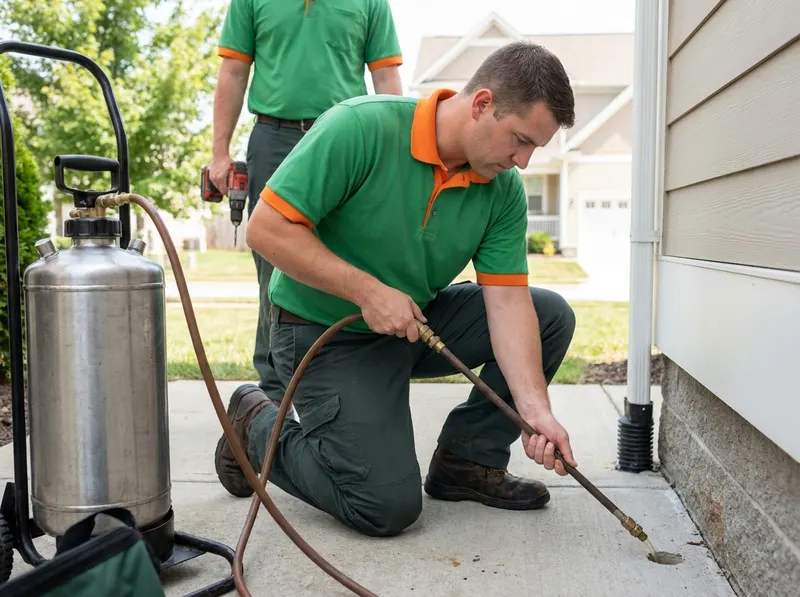
Liquid non-repellent termiticide trenching and sub-slab injection systems designed to eliminate Eastern subterranean termite colonies before wood-framing structural integrity is compromised around masonry foundations. Field applications involve digging continuous six-inch perimeter trenches along concrete grade beams, masonry stem walls, and crawlspace support piers to saturation thresholds of four gallons per ten linear feet. Technicians treat expansion joints and hollow concrete block cores using directional rotary hammers and pressure injectors to form an unbroken underground barrier against subterranean Reticulitermes flavipes colonies.
Get a quote →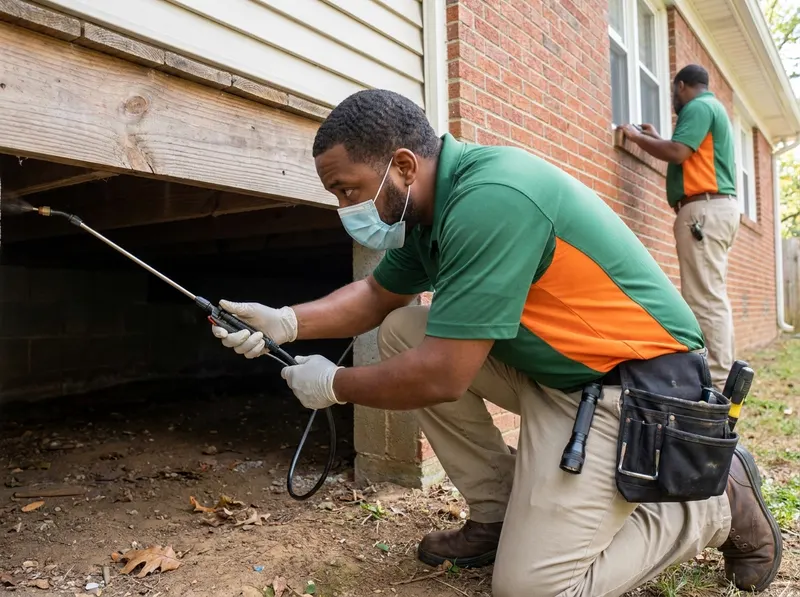
Specialized void-injection dust treatments, microencapsulated surface applications, and mechanical harborage reduction targeted at eliminating established Loxosceles reclusa populations residing within dry subfloor voids, drop ceilings, and insulation layers. Field technicians remove electrical switch plates to pump non-clumping silica dust and deltamethrin directly into framing cavities where venomous arachnids shelter during daylight hours. Technicians place high-tack monitoring glue boards along subfloor baseboard pathways to gauge lingering density and systematically dismantle paper and unsealed cardboard harborage sites within attic spaces.
Get a quote →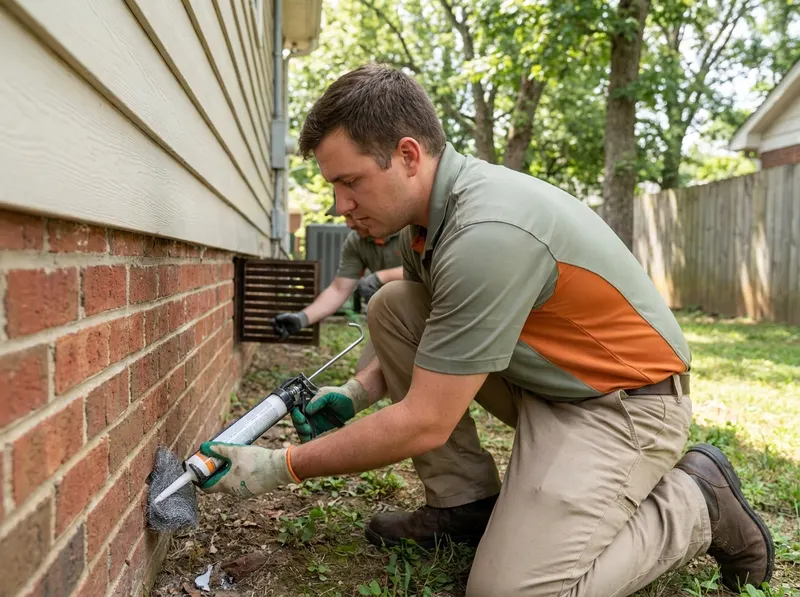
Systematic entry-point sealing using heavy 24-gauge galvanized hardware cloth, expanding foam, and structural hydraulic sealants, paired with interior trapping to clear Norway rats, roof rats, and field mice from crawlspaces and attics. Exclusion teams inspect low foundation vents, crawlspace access hatches, AC line chase penetrations, and roofline soffit returns where fascia meets stone trim. Interior remediation pairs directional snap-trapping arrays positioned along physical perimeter runways with sanitation treatments to remove droppings, urine trails, and biological pheromone markings that draw secondary invaders.
Get a quote →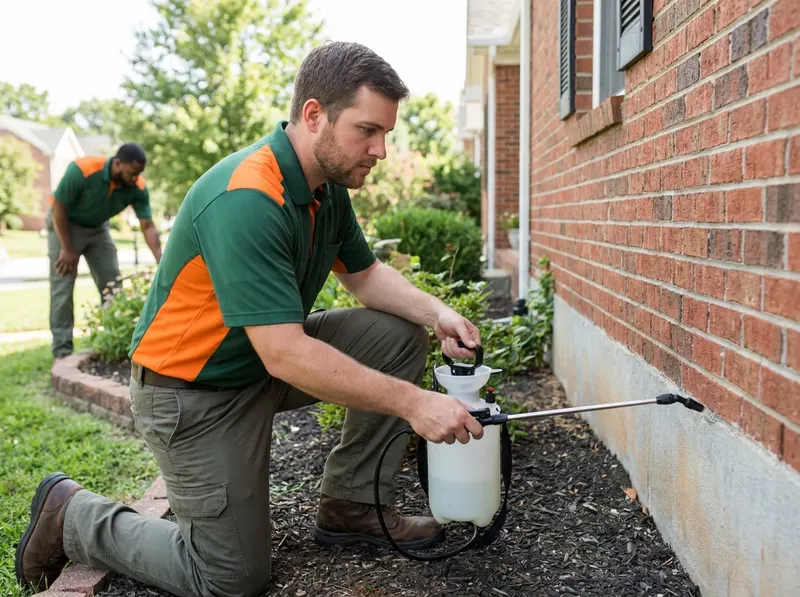
Scheduled exterior foundation band sprays, weep-hole inspections, and de-webbing treatments delivered four times per year to stop seasonal pests before specimens cross residential thresholds. Service protocols include establishing a continuous six-foot chemical envelope upward onto siding and three feet outward across surrounding topsoil using microencapsulated pyrethroid suspensions that resist UV breakdown and rain dilution. Technicians inspect weep screens on brick veneers, clear spider webs and mud dauber nests from eaves, and broadcast granular moisture-activated perimeter baits across adjacent landscape mulch beds.
Get a quote →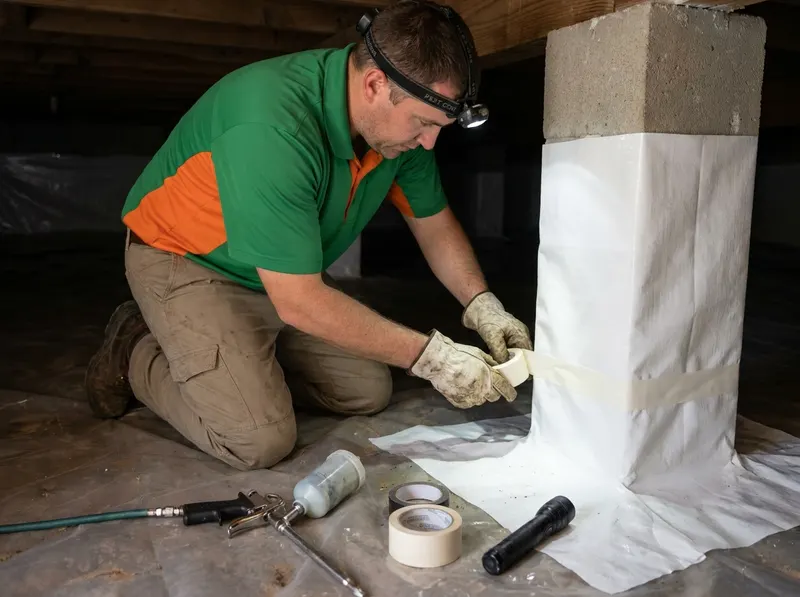
Vapor barrier installation, foundation pier sealing, and localized dehumidification adjustments to strip subterranean wood borers and humidity-loving insects of required sub-structure moisture zones. Technicians install commercial 12-mil to 20-mil reinforced polyethylene liners across bare earthen floors, lapping sheeting up foundation walls and sealing seams with heavy butyl construction tape. Removing damp crawlspace ground evaporation disrupts the lifecycle of wood-destroying powderpost beetles, silverfish, and camel crickets while eliminating the damp framing pockets that attract subterranean termite exploration.
Get a quote →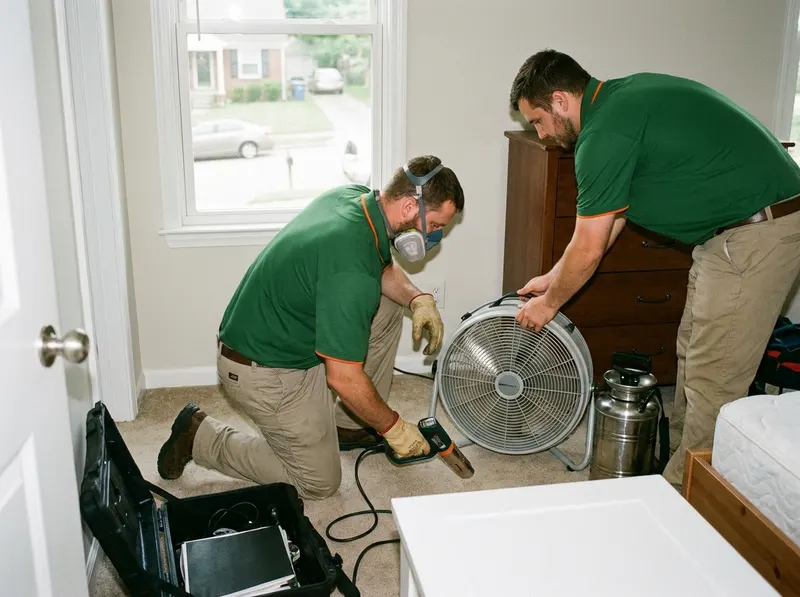
High-output structural heat application and targeted insect growth regulator treatments designed to eradicate Cimex lectularius eggs, nymphs, and mature adults embedded within mattresses, box springs, and baseboard crevices. Industrial high-volume axial air heaters raise internal structural chamber temperatures to lethal thresholds between 122 and 135 degrees Fahrenheit, holding peak heat for a minimum of four continuous hours to permeate thick mattress seams, wood headboards, and interior wall voids. Technicians augment heat sweeps with non-repellent liquid spot treatments along baseboard tracks to prevent migration into adjoining rooms.
Get a quote →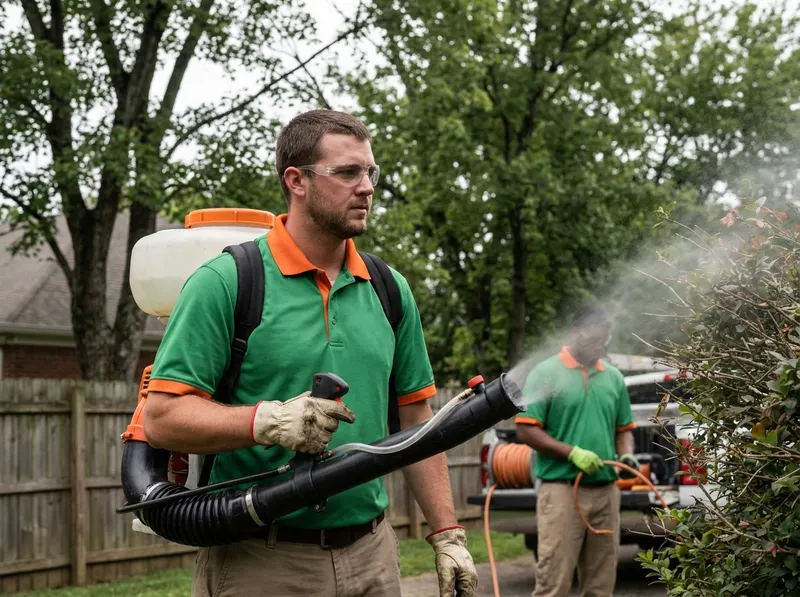
Targeted adulticide fogging and larvicide treatments applied to shaded landscape perimeters, damp leaf litter zones, and standing water vectors from late spring through early autumn. Backpack motorized mist blowers distribute microencapsulated adulticides to resting foliage surfaces, including the undersides of broadleaf shrubs, ground-cover ivy, and tree canopies up to twelve feet high where Culex and Asian tiger mosquitoes rest. Technicians treat non-draining landscape basins and catch-basin storm gutters using slow-release biological Bacillus thuringiensis israelensis briquettes to stop mosquito larvae emergence.
Get a quote →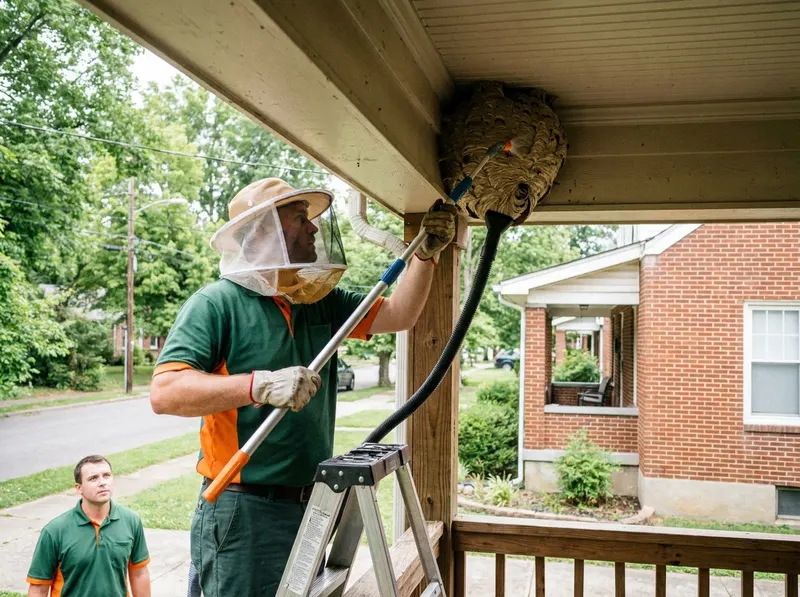
Physical neutralization and extraction of bald-faced hornet, paper wasp, and yellow jacket nests anchored beneath exterior eaves, fascia boards, chimney crowns, and retaining walls. Technicians wear protective sting-proof suits and use directional non-conductive extension poles to inject freeze-action aerosol knockdown formulations directly into hive entry orifices. Once worker activity ceases, teams detach the structural nest envelope from roof decking, stucco, or siding, scraping away anchor footings and applying residual synthetic repellents to deter returning scout wasps from constructing secondary nests on identical surfaces.
Get a quote →You get a firm, itemized quote for your pest control services before any work begins, no surprises, no pressure.
Careful prep, tidy work, and a full cleanup when we are done. We treat your home and belongings like our own.
The same trusted, background-checked team from the first call to the final check.
Selecting an intervention method requires matching the structural layout of the building against the nesting biology of the target species. If you want ongoing defense against seasonal roaches, pavement ants, and exterior spider migrations, choose quarterly preventative perimeter barriers applied every 90 days across a six-foot exterior foundation apron. If you want eradication of an active wood-destroying subterranean termite colony, choose liquid non-repellent termiticide trenching or localized baiting station matrices installed at ten-foot intervals along structural drip lines.
The trade-off between these protocols centers on treatment depth and upfront mechanical expenditure: preventative surface perimeter bands require lower initial material deployment but leave subterranean foundation footings unshielded against underground soil-borne termite tunnels that bypass ground-level surface chemicals. If you are dealing with an established brown recluse population nested within drywall cavities and cellulose attic insulation, choose systematic attic, crawlspace, and subfloor void dusting over standard baseboard contact spraying. The trade-off is higher labor allocation for detailed mechanical wall plate removal, electrical switch-box isolation, and targeted void access versus surface contact sprays that merely agitate brown recluses into living spaces without reaching resting harborage zones.
For seasonal rat or squirrel invasions, choose comprehensive physical crawlspace and roofline exclusion over recurring toxic bait stations. Exclusion demands higher upfront carpentry and sealing costs using 24-gauge steel wire cloth and mortar repairs, but it permanently stops roofline entry and prevents indoor carcass decomposition and secondary odor development inside central HVAC ductwork. If you are handling severe localized German cockroach infestations in multi-family rental units, choose insect growth regulator baits coupled with non-repellent transfer chemistry instead of high-odor total-release foggers.
The trade-off is a measured four-week timeline to break the developmental egg nymph cycle versus instantaneous fogging knockdowns that leave egg oothecae intact inside appliance motor compartments, triggering secondary population surges within 21 days.
Every project gets a firm, written price after a free on-site visit. Ranges below for orientation.
Tell us about your pest control services job and we'll send a clear, written quote, usually the same day. Or just call and talk to a real Nashville pro.
(615) 557-9964
Nashville properties face heightened biological pest pressure driven by native Ordovician limestone geology, subterranean natural spring networks, and warm humid subtropical summer microclimates. Neighborhoods flanking the Cumberland River basin and Shelby Bottoms Greenway experience persistent perimeter moisture that accelerates subterranean termite exploration and mosquito breeding across riparian floodplains. Older architectural typologies, including stone-pier foundation cottages in Belmont-Hillsboro, historic brick structures in Germantown, and crawlspace ranches in Crieve Hall, feature porous baseline vents and settled sill plates that invite brown recluse colonization and winter rodent migrations when temperatures plunge near Radnor Lake State Park and the Highland Rim ridges. Limestone outcroppings and shallow bedrock throughout The Nations and Sylvan Park obstruct natural drainage, leaving crawlspaces saturated during extended spring downpours and creating optimal nesting moisture for wood-destroying fungi and termites. In heavily wooded residential areas such as Belle Meade, Green Hills, and Inglewood, mature hardwood canopies drop continuous organic leaf litter against foundation perimeters, fostering expansive populations of carpenter ants, smokybrown roaches, and field mice. These dynamic local conditions demand localized structural exclusion strategies, subfloor moisture mitigation, and foundation-grade barrier chemistry rather than generic surface spraying across Middle Tennessee properties.
Free estimates for Nashville & the surrounding area.
 Praxira Pest Experts