A dual-protocol approach resolves active Cimex lectularius infestations by addressing both immediate biology and delayed egg emergence. While standalone store-bought pyrethroid sprays often induce chemical avoidance,…
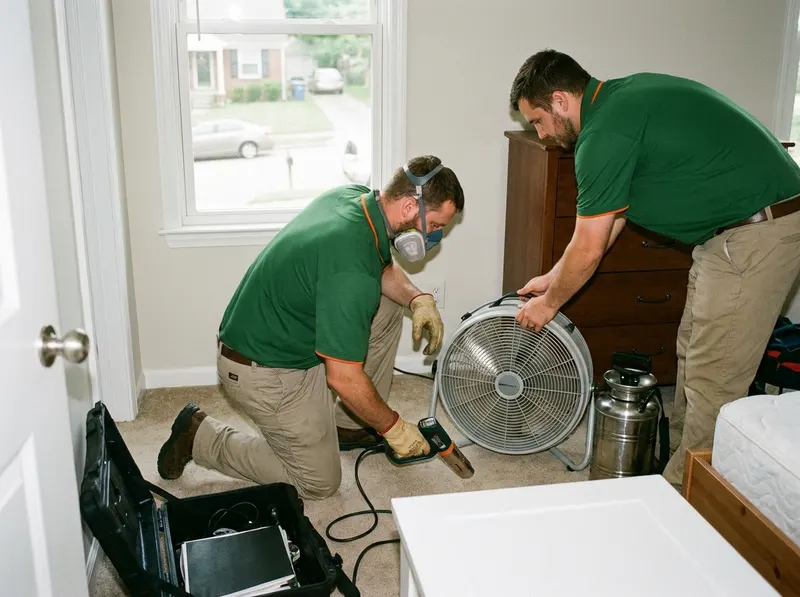
A dual-protocol approach resolves active Cimex lectularius infestations by addressing both immediate biology and delayed egg emergence. While standalone store-bought pyrethroid sprays often induce chemical avoidance, causing bed bugs to scatter into interior wall voids, industrial convective heaters elevate core ambient temperatures to a lethal threshold of 122°F. Electric and indirect fired heaters circulate pressurized air across textiles, behind electrical faceplates, and deep into hardwood subfloors commonly found in historic East Nashville cottages and Belmont-Hillsboro bungalows. Temperatures are held between 120°F and 135°F for at least 4 continuous hours, denaturing the cellular proteins of adult insects, nymphs, and embryonic eggs without damaging structural drywall or cabinetry.
Thermal remediation requires precise pre-treatment clearance to ensure complete efficacy. Heat penetrates standard mattresses, upholstered headboards, and heavy draperies, but high-density clutter acts as thermal insulation that shields nesting pests. For multi-story residences in The Nations or horizontal apartment footprints in Germantown, thermal heat is paired with targeted liquid or dust residual barriers along room perimeters. These non-repellent agents sit behind switch plates, along tack strips under wall-to-wall carpeting, and within crawlspace transition points. If an adult insect attempts to avoid rising ambient temperatures by retreating into exterior wall chases, it contacts the active residual, neutralizing it upon re-entry.
Homeowners selecting an eradication strategy weigh single-day resolution against physical preparation labor. Thermal remediation allows complete structural recovery in one continuous 8-hour window without throwing out furniture, whereas chemical-only protocols demand 2 to 3 separate applications spaced 14 days apart to target freshly hatched nymphs. The trade-off centers on upfront logistical preparation: thermal remediation requires removing heat-sensitive items, including aerosol cans, wax candles, vinyl records, oil paintings, and prescription medications, prior to equipment setup. In neighborhoods with high humidity profiles such as Donelson, Inglewood, and Crieve Hall, drying and heating airflow must be constantly balanced using industrial air movers to protect structural trim while maintaining lethal temperatures inside structural framing.
Every job gets a firm, written price after a free on-site visit.
Tell us about your bed bug thermal and chemical remediation job in Nashville and we'll send a clear, written quote, usually the same day.
 Praxira Pest Experts